
Boiler and Heat Pump Readiness for Vermont Winters
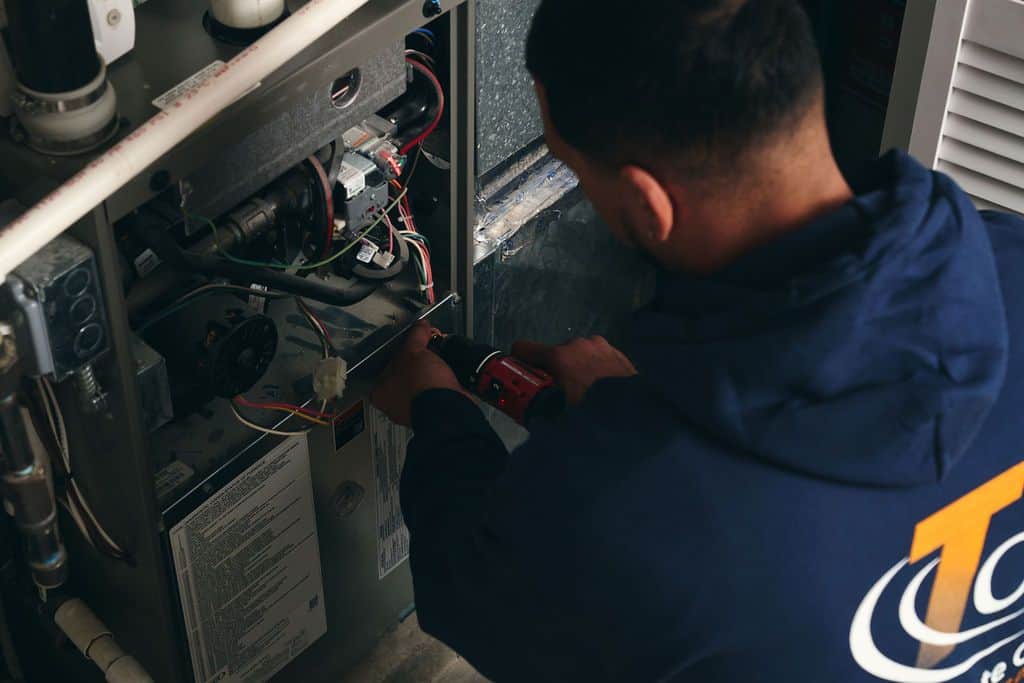
A Vermont heating season is long enough that equipment which is merely adequate in October becomes a problem by February. The failures we get called for in midwinter are rarely sudden; most of them were visible in the fall as a pressure reading that had drifted, a radiator that never quite got hot, or a defrost cycle that was not completing.
This guide covers what to check on a boiler and on a heat pump before the cold sets in, which items are homeowner work and which are not, and what a professional inspection adds. Total Climate Control handles HVAC, plumbing, and electrical services across Windsor, Orange, Washington, Chittenden, and Franklin counties.
Essential Steps for Winter Boiler Maintenance
Start with the pressure gauge. A residential hot water boiler typically runs around 12 to 15 psi when cold, though you should check the plate on your own unit, since the correct cold-fill pressure varies with the height of the system. A reading that has drifted low usually means the system needs to be refilled and, more importantly, that someone should find out where the water went. Pressure that climbs above normal points the other direction, often to a failing expansion tank.
Bleed the radiators before the season starts. This one is genuinely homeowner work: air collects at the high points of a hydronic loop, the closed circuit of hot water your radiators run on, and blocks circulation, which is why an upstairs radiator stays cool while the rest of the house heats. Open the bleed valve until water appears and the air is out.
What we look at goes further: the burner and its flame pattern, the low-water cutoff, which shuts the boiler down if the water level drops too far, the circulator, the expansion tank charge, and the venting. On oil-fired equipment that includes the nozzle and filter. Wet spots or mineral crust around valves and fittings mark slow leaks that will get worse under a full season’s load. We also handle water heater services and can insulate the supply lines running through crawl spaces and unheated basements, which is where the pipes actually freeze.
Getting a Heat Pump Ready for Freezing Temperatures
A heat pump lives or dies on airflow at the outdoor unit, and the fall cleanup is the thing that protects it. Clear leaves, branches, and vegetation away from the coil, and think about snow before it arrives. Drifting and roof shed both bury outdoor units in this climate, and a unit sitting in packed snow cannot pull air. A stand that lifts the unit above expected snow depth, plus a clear area through the season, addresses both.
The defrost cycle deserves a specific check. A heat pump accumulates frost on its outdoor coil in cold, damp weather and periodically reverses to melt it off. When defrost fails, ice builds until the system can no longer transfer heat, and it will run continuously while the house gets colder. Watch one full defrost cycle before the season and you will know whether it is working.
It is also worth knowing your system’s balance point, the outdoor temperature at which its output stops keeping pace with the heat your house is losing. Below that point, supplemental heat carries the difference. Where that line falls for your equipment explains your winter electric bill better than anything else, and it is a calculation we run during an evaluation. We install and service Mitsubishi Electric equipment as a Mitsubishi Electric Elite Diamond Contractor, the top tier of that manufacturer’s contractor program, and also handle A/C installations, mini splits, and dehumidifier work.
What Else Affects Winter Performance
Heating equipment is only as good as what surrounds it. Duct leakage in an unconditioned basement or attic loses heat before it reaches a room. A smart thermostat programmed with aggressive setbacks can work against a heat pump, because recovering from a deep setback often pulls in auxiliary heat and costs more than holding a steadier temperature.
Power is the other dependency people forget. A boiler needs electricity for its circulator and controls, so an outage stops the heat in a house with a full oil tank. A standby generator addresses that, and surge protection protects the control boards that modern equipment depends on. We also handle heating repairs and water softener systems, since hard water shortens the life of anything that heats it.
Plan Ahead for a Warm Winter
Test your heating system during the first hard freeze and you may find yourself waiting for parts in January. A fall evaluation gives you time to order what is needed and schedule the work while the calendar is still open, and it is when a small repair is still a small repair.
Book now and you are not competing with everyone else for the same appointment slot after the first cold snap. Reach out and we will get your heating equipment on the schedule.
Get on the Schedule
Contact Total Climate Control
Our licensed technicians provide upfront pricing and practical recommendations for heating, cooling, plumbing, and electrical services. Schedule your service visit online. Our office is located at 197 N Main St, Unit 5&6, Boscawen, NH 03303, and we dispatch locally across New Hampshire and throughout Windsor, Orange, Washington, Chittenden, and Franklin counties in Vermont.