
Boiler vs Furnace: Which Heating System Makes Sense for Your Home?
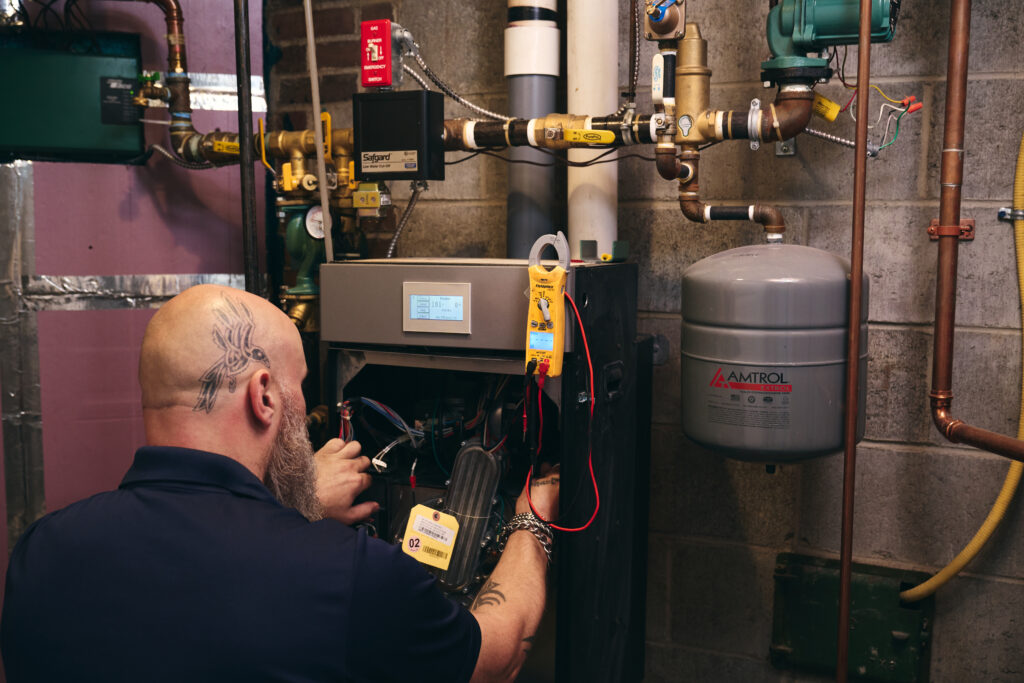
Deciding on a boiler vs furnace for a New Hampshire home often depends on your existing heating setup. Both heating platforms handle severe winter conditions well, but they deliver warmth through entirely different mechanical methods. Hydronic systems send heated water through closed-loop piping to radiators or baseboards. In contrast, forced-air equipment uses a blower fan to push warm air through air duct networks and supply registers. Here is a clear breakdown of how these two options compare in everyday performance, maintenance requirements, and overall system lifespan.
The Fundamental Difference: Hydronic Water vs Forced Air
Understanding the difference between boiler and furnace operations starts with how each unit generates and transfers thermal energy. Boilers heat water to circulate thermal energy through closed piping, whereas furnaces heat air directly and distribute it through supply registers.
How Boilers Heat With Water and Steam
A boiler system relies on a burner assembly, a heat exchanger, and circulating water or steam to warm living spaces. The heated liquid moves through copper or PEX tubing toward baseboard convectors, cast-iron radiators, or underfloor radiant tubing loops. Modern hydronic systems can also power an indirect water heater, using the central boiler to produce domestic hot water efficiently for showers and sinks. When circulation pumps or zone valves fail during mid-winter freezes, prompt boiler repair keeps the hydronic loops from locking up or losing flow.
How Furnaces Heat With Air and Ducts
A furnace operates as a forced-air appliance that draws ambient indoor air across a sealed heat exchanger before pushing it into duct networks. A powerful blower motor drives warm air through supply ducts to registers positioned in floors, walls, or ceilings across different rooms. Return air vents collect cooled air from your living areas and pull it back to the air filter before another heating cycle begins. Because forced-air setups share distribution pathways with central cooling, they make adding an A/C system straightforward if ductwork already exists.
Heating Performance: Baseboard Radiation vs Ducted Warm Air
The contrast between radiant heat vs forced air affects comfort levels across cold New England winter nights. Baseboards and radiators transfer heat slowly into building materials and surrounding objects, creating an even thermal profile from floor to ceiling. Forced-air systems deliver rapid temperature increases, though warm air naturally rises and can produce cooler zones near exterior walls and floorboards.
Even Heat Distribution and Indoor Air Quality
When weighing furnace vs boiler performance, radiant heat delivers a noticeable difference in draft control and steady indoor temperatures. Hydronic baseboards emit warmth without blowing air, which prevents dust, pollen, and pet dander from circulating repeatedly through living quarters. Ducted systems require consistent filter changes to keep dust under control and may create dry air that benefits from a dedicated whole-home humidifier.
Zoning Capabilities and Domestic Hot Water
Boilers excel at precise multi-zone control through individual thermostat lines, dedicated circulator pumps, and motorized zone valves. A hydronic layout lets you maintain separate temperatures on the first floor, upper bedrooms, and finished basement spaces without wasting fuel. Furnaces require mechanical duct dampers and complex bypass configurations to achieve zoned airflow, which can increase static pressure within duct runs. In addition, an indirect hot water tank connected to a boiler provides high-volume hot water recovery that standalone water heaters rarely match.
Maintenance Realities and System Lifespans
Boilers and furnaces each demand seasonal attention from licensed heating technicians to run safely and reliably. Boiler maintenance includes checking system water pressure, inspecting expansion tanks, testing relief valves, and flushing sediment from low points. Furnace tune-ups prioritize inspecting heat exchangers for cracks, testing flame sensors, cleaning blower assemblies, and verifying burner safety switches. Cast-iron boilers frequently achieve extended operational service lives because they feature few high-speed mechanical moving parts. Furnaces rely on continuous blower motor rotation and draft inducers, requiring regular mechanical inspection to avoid unexpected heating interruptions.
Replacing Your Heating System: Factors to Consider
Evaluating a boiler vs furnace requires looking at your existing infrastructure, your long-term comfort preferences, and the physical footprint of your mechanical room. Adding full ductwork to an established home with finished plaster or drywall can be disruptive and labor-intensive. Retrofitting hydronic baseboards into a property designed purely around ductwork involves running new supply and return lines across floor framing. Our experienced technicians handle comprehensive heating installation projects to match your building layout with the proper heating equipment.
Choosing the Right Heating Equipment for Your Property
The choice between a boiler vs furnace comes down to whether your property is built for hydronic distribution or ductwork. Boilers deliver silent, steady radiant warmth with superior multi-zone options and durable cast-iron construction that holds heat exceptionally well. Furnaces provide rapid warmth, integrate directly with whole-home filtration and central A/C systems, and respond swiftly to thermostat adjustments. Consulting with a qualified local heating specialist ensures your replacement system aligns with your home architecture and winter heating demands.
Act Now
Schedule Your Heating Consultation With Total Climate Control
Total Climate Control provides professional heating solutions to keep New Hampshire homes warm and protected throughout the winter months. Our licensed technicians dispatch from Penacook, NH, delivering reliable equipment evaluations, precision tune-ups, and complete heating replacements. We have been serving NH since 2008, with upfront pricing to help you select and maintain your ideal heating setup. Contact our team to book your appointment today.